Biodegradable Trash Bags
Biodegradable Trash Bags: A Step Toward Greener Living
In an era of growing environmental concern, biodegradable trash bags have emerged as a vital alternative to traditional plastic ones. As headlines warn of microplastics in our oceans, soil, and even human blood, more households and businesses are questioning the true cost of convenience. Unlike conventional plastics that linger in landfills and oceans for centuries—slowly fragmenting into harmful particles that contaminate ecosystems and enter the food chain—biodegradable bags break down naturally into non-toxic substances such as water, carbon dioxide, and biomass when exposed to the right combination of microbes, moisture, and oxygen.
The science behind biodegradability is straightforward yet powerful. Traditional plastic bags are derived from petrochemicals, with long polymer chains that most microorganisms cannot digest. As a result, a standard plastic bag tossed into a landfill today will still be largely intact 400 years from now. Biodegradable bags, by contrast, are engineered from materials that naturally occurring bacteria and fungi recognize as food. Under ideal conditions—such as in industrial composting facilities or well-managed soil environments—these bags can fully decompose within 90 to 180 days, leaving behind no toxic residue or persistent microplastics.
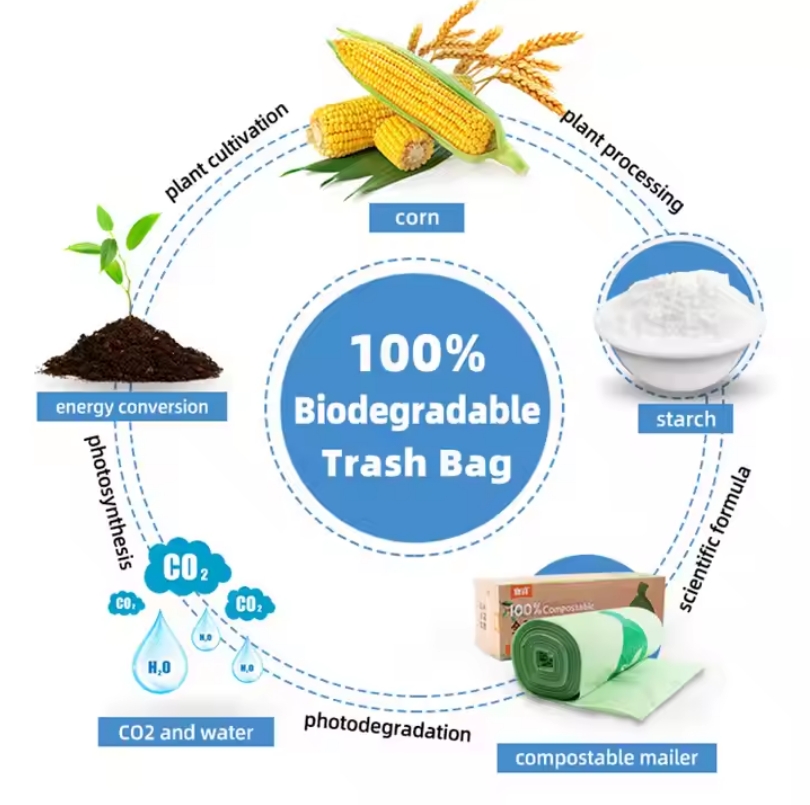
Made from renewable resources such as cornstarch, sugarcane fiber (bagasse), potato starch, or other plant-based polymers, biodegradable trash bags reduce our heavy reliance on fossil fuels, which are used to manufacture regular plastics. Producing conventional plastic bags releases significant greenhouse gases and consumes non-renewable petroleum. By shifting to bio-based materials, each biodegradable bag represents a measurable reduction in carbon footprint. They also directly minimize plastic pollution, which harms wildlife through ingestion and entanglement, disrupts marine and terrestrial ecosystems, and eventually finds its way back to humans through contaminated water and food.
Admittedly, biodegradable trash bags may cost slightly more than conventional options—typically 20 to 40 percent higher depending on the brand and certification. However, their long-term environmental benefits far outweigh this modest price difference. For households, switching to biodegradable bags for kitchen scraps, bathroom bins, and pet waste is one of the easiest and most visible ways to reduce daily plastic consumption without changing daily routines. For businesses, especially in food service, retail, and hospitality, using certified biodegradable bags signals environmental responsibility to customers, helps meet corporate sustainability goals, and prepares for stricter packaging regulations already in effect across the European Union, parts of North America, and several Asian economies.
It is important to note, however, that not all "biodegradable" labels are equal. Some products marketed as biodegradable only break down under specific industrial conditions that may not exist in local landfills. Consumers should look for credible third-party certifications such as ASTM D6400 (USA), EN 13432 (Europe), or OK Compost, which guarantee that the bag will decompose within a set timeframe in a composting environment. Proper disposal also matters: biodegradable bags placed in regular trash may not receive the oxygen, heat, and microbes needed to break down efficiently.
By choosing biodegradable trash bags, consumers and businesses alike take a small but impactful step to cut plastic waste, support sustainable material cycles, and protect the planet for future generations. It is a simple switch—easier than carrying reusable containers, cheaper than recycling systems, and more immediate than waiting for new laws. With every bag that disappears back into the earth instead of lingering for centuries, we move closer to a healthier, greener world. The choice is small, but the collective impact is enormous.
Biodegradable Plastic Bags
Biodegradable Bag