Craftsmanship Defines Quality: A Detailed Look at the Full Standardized Production Process for High-Quality Commercial Plastic Bags
In the plastic packaging industry, many procurement clients hold a misconception: they believe plastic bags have a simple structure and low technical barriers, and that product quality differences are negligible. However, in actual procurement, people often encounter various quality issues such as uneven thickness, easy tearing, seal splitting, print fading, unpleasant odors, and substandard load-bearing capacity. At the root of these problems, the key difference in product quality lies not in the raw material type, but in the precision of the production process and the standardized quality control system. As a factory with over a decade of experience, we will provide a detailed explanation of the finer points of plastic bag production.
I. Raw Material Pretreatment Process: Eliminating Quality Risks from the Source
High-quality products begin with high-quality raw materials. Raw material pretreatment is the first critical step in the entire production process, directly determining the toughness, transparency, safety, and service life of the plastic bags. Inferior plastic bags on the market commonly use recycled mixed materials and scrap edges that have not undergone fine sorting and treatment, resulting in brittle finished products, unpleasant odors, many impurities, and easy breakage.
We strictly implement a standardized raw material pretreatment process. Our entire production line uses only virgin HDPE and LDPE plastic pellets and eco-friendly degradable materials, completely eliminating the use of recycled mixed materials. Before production, our multi-stage screening, dust removal, and drying processes remove dust, impurities, and moisture from the raw materials, effectively preventing defects like bubbles, black spots, and light transmission imperfections in the finished products. Simultaneously, we precisely formulate raw material parameters according to the product's intended use: food-grade packaging bags strictly comply with food contact safety standards; industrial heavy-duty bags have optimized raw material density ratios; and degradable bags have precisely controlled proportions of biomass materials. This approach ensures stable and consistent product performance tailored to different usage scenarios from the very start.
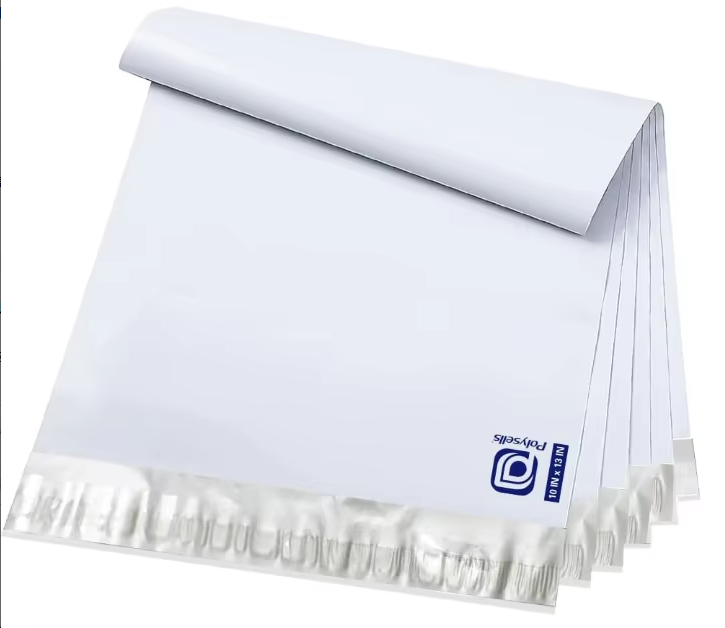
II. Fully Automatic Blown Film Process: The Core Link for Controlling Film Uniformity
Blown film is the core process in plastic bag formation. The film's thickness uniformity, toughness, and flatness are entirely determined by the precision of the blown film process, and this is the key differentiator between large-scale factory craftsmanship and small workshop operations. Traditional, outdated equipment with manual adjustments suffers from significant errors, easily leading to large thickness deviations and uneven tension, resulting in bags that are thick on one side and thin on the other, tearing easily under stress.
1. Precision Temperature Control and Intelligent Regulation
We utilize fully automatic CNC blown film equipment with multi-zone constant temperature extrusion technology. This precisely controls production temperatures and screw speeds, ensuring thorough melting and plasticization of the raw materials, resulting in a dense film structure and uniform toughness. Paired with an infrared online thickness measurement system that monitors film thickness in real-time and automatically fine-tunes parameters, we control thickness errors within an extremely small range, thoroughly solving the industry-wide problems of uneven thickness and localized thinning.
2. Closed-Loop Cooling and Setting Process
We employ an internal and external dual closed-loop cooling system for uniform temperature reduction and setting. This stabilizes the film's molecular structure, resulting in high flatness, no wrinkles, and no stretching deformation in the finished products. Films produced with this process exhibit significantly improved tensile strength and aging resistance. The resulting plastic bags are resistant to pulling and abrasion, can be reused, and effectively reduce packaging breakage rates.

III. Eco-Friendly Printing Process: High-Definition and Wear-Resistant, Suitable for Brand Customization
The printing process directly impacts the appearance and brand presentation of plastic bags, making it a core process for customized export packaging. Inferior printing often suffers from blurry patterns, significant color deviations, pungent ink odors, and color fading from friction. This not only affects aesthetics but can also lead to non-compliance with export regulations.
We utilize an eco-friendly water-based ink flexographic printing process, which is solvent-free, emits no volatile harmful substances, and is safe and non-toxic. It is fully compatible with food packaging and international export environmental standards. Our equipment supports comprehensive customization, including single-color, multi-color, logos, patterns, and text. The printing offers high precision, excellent color reproduction, and sharp edges without bleeding. Additionally, we incorporate an ink curing process that significantly enhances pattern adhesion, making it resistant to friction, pulling, and fading, ensuring colors remain vibrant even after long-term storage. This meets corporate branding needs while mitigating risks of ink contamination and exceeding regulatory limits.
IV. Precision Bag Making and Sealing Process: Determining Product Load-Bearing Capacity and Seal Integrity
Bag making, cutting, and heat sealing are the final core processes in plastic bag formation. The seal strength and cutting precision directly determine the product's load-bearing capacity and sealing performance, and are crucial for preventing leaks and breaks during transportation. Many inferior bags may appear intact but easily crack at the seal or burst at the bottom when loaded with heavy items or subjected to pressure. The core issue is substandard heat sealing technology.
We employ a CNC precision heat sealing + seamless cutting integrated process. Based on the bag's thickness and material, we intelligently adjust heat sealing temperature, pressure, and speed, allowing the molecules at the seal to fully fuse, resulting in a tight, secure, and resilient seal. Whether for lightweight food bags, heavy-duty industrial bags, or high-load-bearing shopping bags, the seals are uniformly strong, able to withstand pressure, pulling, and long-distance transportation. Meanwhile, our fully automatic cutting equipment ensures precise bag dimensions, smooth, burr-free edges, and a neat, attractive finished product, suitable for various commercial, warehousing, and export scenarios.
V. Finished Product Full Inspection Process: Rigorous Quality Control at Every Stage
The core of standardized production lies not only in advanced processes but also in a strict closed-loop quality control system. We have established a multi-dimensional product testing system. Before leaving the factory, each batch undergoes rigorous sampling inspection, encompassing tensile load-bearing tests, seal water resistance tests, temperature resistance tests, appearance defect inspections, and print adhesion tests.
For export orders, we conduct additional compliance testing to ensure that product materials, processes, and environmental indicators meet the import standards of various countries, including those in the EU and Southeast Asia. This prevents defective or substandard products from leaving the factory. From raw materials to finished goods, the entire process is controllable and quality traceable, guaranteeing that delivered products are 100% compliant.
VI. Craftsmanship Empowers Products, Creating Core Advantages for the Source Factory
Leveraging our comprehensive, intelligent, and standardized production processes, our entire range of plastic bags boasts core advantages: high toughness, high seal integrity, high compliance, and high durability. Our product portfolio covers all categories, including HDPE industrial bags, LDPE food-grade bags, biodegradable eco-bags, and customized printed bags. Our stable process system allows us to efficiently handle both large-volume bulk export container orders and small-batch custom orders, ensuring consistent delivery lead times, uniform quality, and outstanding cost-effectiveness.
Conclusion
The quality of plastic bags is hidden in the details of every single production process. Crude processes can only yield cheap, inferior products, while refined, standardized, and intelligent production processes are essential for creating high-quality packaging products that meet global market demands. As a source factory that prioritizes craftsmanship, we consistently put process innovation at the core, uphold quality control as our bottom line, continuously optimize production workflows, and upgrade equipment and techniques. We provide global customers with more durable, more compliant, and more cost-effective customized plastic bag solutions, helping enterprises reduce costs, increase efficiency, and enhance their brand packaging competitiveness. You can trust us—Qingdao Shimao.
Unveiling the Journey: How a High-Quality Plastic Bag Is Born
Green Revolution in the Plastic Bag Industry: Processes, Environmental Protection, and Future Trends
Related Article