Battle on Plastic Bags: Flexographic vs. Gravure Printing – Which Makes Your Logo Shine?
Most overseas brand owners, cross-border buyers, and offline retailers only focus on logo designs, quotes, and lead times when ordering custom-printed plastic bags. They overlook the most critical underlying factor: printing technology – which directly determines brand appearance, batch-to-batch color consistency, and landed cost. For many brands, the logo on plastic packaging can make or break brand image. As a plastic factory with over a decade of experience, we use this blog to explain the common pitfalls in logo printing and how to avoid them.
1. Two Mainstream Printing Processes for Plastic Bags – The Fundamental Production Logic
Plastic film surfaces are smooth and non-absorbent, making them far more challenging to print on than paper. This is precisely why many ordinary factories struggle with high-quality color printing. Currently, only two processes are compliant for mass production:
-
Flexographic Printing (Flexo) – An eco-friendly mainstream process that uses soft resin photopolymer plates. Raised graphics transfer water-based inks directly onto PE/HDPE film surfaces. The equipment is simple, and plate-making is fast, making it the go-to choice for small-to-medium volume custom plastic bags, suitable for all types of high- and low-density polyethylene substrates.
-
Gravure Printing (Rotogravure) – A high-end commercial printing process that uses laser-engraved metal cylinders. Graphic areas are etched as recessed cells that hold ink, which is then transferred under high pressure onto the plastic substrate. It delivers thick ink layers and exceptional precision, with high barriers to entry in equipment and engraving – a true high-standard production process.
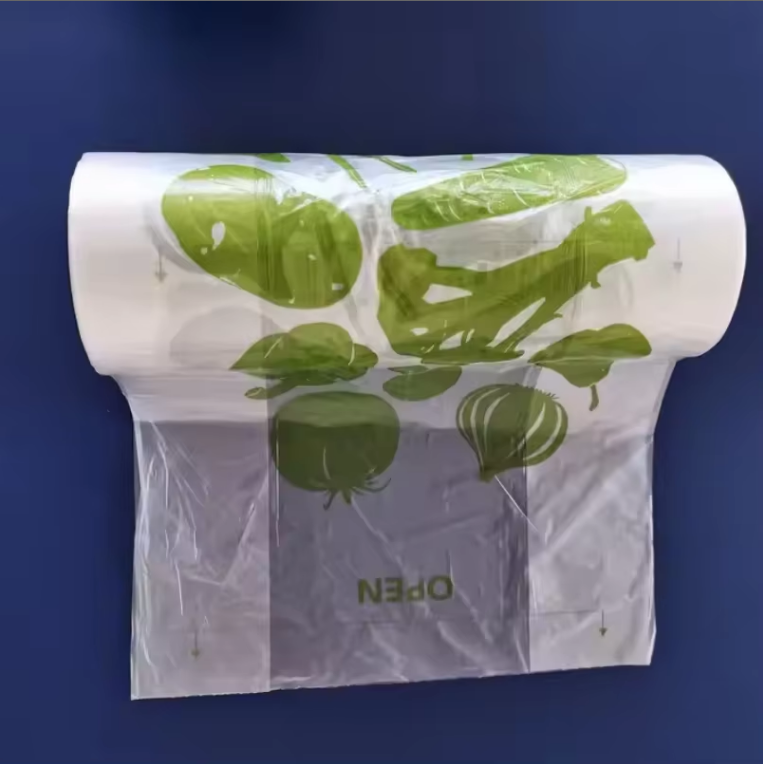
2. Visual Results: The Difference in Brand Logo Quality Is Striking
From the end-brand display perspective, the visual gap between these two processes is most evident in high-definition logos, gradients, and complex patterns – and that's exactly why premium brands prefer gravure.
-
Flexo Printing – Produces clean backgrounds, uniform color blocks, and crisp, neat lines. It is ideal for minimalist logos, solid-color text, and simple graphic layouts. Its limitation: it cannot render fine gradients or shadow layers. Large solid areas may show slight dot patterns, and fine small text may appear slightly soft. Best suited for mass-market circulation, industrial packaging, and general supermarket bags.
-
Gravure Printing – The industry benchmark for plastic printing quality. The ink layer is rich and full, with high color saturation. It flawlessly handles gradients, photographic images, complex embossed logos, and metallic overprint effects. Edges are sharp and dot-free; after lamination, the finish is premium and refined. High-end retail packaging for sea-freight, cosmetics, and light luxury food brands almost exclusively choose gravure to elevate brand identity.
3. Core Procurement Metrics: MOQ and Plate-Making Barriers
The biggest selection hurdle in printing processes is plate-making cost and minimum order quantity (MOQ) – the very foundation of factory quotations:
-
Flexo Printing – Low plate-making cost, short lead times, and no expensive cylinder fees. It suits start-up brands, pilot production runs, small-batch top-ups, and multi-SKU sporadic orders. Artwork changes and plate replacements are cheap and fast, with quicker overall turnaround.
-
Gravure Printing – Requires custom-engraved steel printing cylinders, with high upfront plate-making costs and longer production lead times. The process inherently does not suit small trial orders. However, once large volumes are placed, the per-unit printing cost drops significantly, making it more cost-effective for mature brands with long-term, high-volume repeat orders.
4. Industry Benchmark: Color Difference Control – The Guarantee of Brand Consistency
Branded packaging places the highest value on batch-to-batch color consistency, and this is the biggest technical challenge for any printing factory. We follow the internationally accepted PANTONE color control standard for export orders:
-
Flexo Printing – Standard color difference control at ΔE ≤ 3.0. Due to the nature of soft plates and water-based inks, slight, visually negligible variations may occur over long runs. Through temperature-controlled workshops and a closed-loop ink proportioning system, we keep color variance within industry-leading standards, meeting compliance requirements for the vast majority of small and medium-sized brands.
-
Gravure Printing – The industry's highest standard at ΔE ≤ 1.0. Steel cylinder parameters are permanently fixed, and ink volume remains stable, ensuring zero color deviation across batches and even across years for repeat orders. For chain brands and cross-border giants with strict VI requirements, this near-zero color tolerance ensures globally consistent packaging visuals and smooth acceptance by overseas supermarket quality control.
5. Professional Source Factory – Helping You Choose the Optimal Printing Solution
Ordinary plastic bag factories only accept orders based on their existing equipment, without considering the brand's strategic needs. As a Google-direct source factory, our core advantage is not merely selling plastic bags – it's offering brands the best custom-printing solution tailored to their goals.
-
Simple corporate logos and tight budgets – We recommend high-precision flexo printing for low-cost, fast execution with no hidden fees.
-
Premium brand exports, complex full-color artwork, high-volume long-term production, and strict color-value control – We strongly recommend gravure printing to elevate packaging quality and boost product premium.
Additionally, we tackle common plastic-printing issues: ink fading, pattern sticking, pinholes, and more. Every print order undergoes rub resistance testing and PANTONE sample matching before shipment. We can provide full export-quality inspection reports, support remote factory visits, and offer free print samples.
6. Conclusion
A visually stunning brand packaging bag is never the result of random machine operation – it is achieved through precise process matching, rigorous parameter control, and thorough quality screening. The barrier of printing technology is the barrier of your brand packaging's visual appeal.
If you are sourcing custom-branded plastic bags and are unsure about process selection, or if you need strict color-difference control and premium finish quality, contact us at Qingdao Shimao Long through this Google independent site. We offer free process-selection consultations and samples, helping your brand packaging stand out from the competition. We invite you to put your trust in us.
What Exactly Causes Brittle Cracking of Plastic Bag Seals?
Unveiling the Journey: How a High-Quality Plastic Bag Is Born
Related Article