How PCR Recycled Plastic Bags Can Meet Market Access Standards in Europe and the US
Under the current global trade landscape, the plastic packaging environment has undergone significant changes. Companies can no longer base their procurement of plastic packaging bags on low price and cheapness as the sole criteria. If this standard continues to be followed, your company and brand may face certain risks.
As a factory with over a decade of production experience, we have observed a shift in customer needs. Clients are no longer focusing solely on price inquiries but are instead concentrating on a very specific technical indicator: PCR (Post-Consumer Recycled). This article combines past experience to explain some issues and insights regarding PCR materials.
1. Not All "Recycled Materials" Can Be Called PCR
Based on our extensive experience, we find that people often confuse PIR (Post-Industrial Recycled) with PCR (Post-Consumer Recycled).
-
PIR (Post-Industrial Recycled): Derived from offcuts and scraps during factory production. This material has high purity and performance close to virgin material, but under the latest欧美 regulations (e.g., the UK's Plastic Packaging Tax), its "environmental weight" is far lower than PCR.
-
PCR (Post-Consumer Recycled): Derived from packaging collected through waste sorting and recycling. It has a lower carbon footprint, but due to its complex source, its melt flow index (MFI) fluctuates significantly.
2. What Problems Arise When Increasing the PCR Ratio?
-
Deteriorated Physical Properties: Reduced tensile strength/strength, increased brittleness, required thickness increases, unstable heat seal strength.
-
Poorer Appearance & Unstable Color: Yellowing, graying, reduced transparency, black spots, impurities, gels, low gloss, dullness, large batch-to-batch color differences.
-
Odor and Hygiene Risks (especially for food contact): Unpleasant smells, migration risks, impurities, and heavy metals.
-
Production & Processing Issues: Unstable melt, poor flowability, rapid filter clogging, difficult temperature control, increased energy consumption, soaring scrap rates.
-
Potentially Higher Costs: PCR raw material prices often exceed virgin material prices; plus losses, energy, labor, and high certification costs.
-
Compliance & Market Risks: High PCR ratios may fail food contact standards, limiting use to non-food bags (shopping bags, garment bags); increased customer complaints; risk of regulatory changes.
3. How to Improve "Fish Eyes" (Surface Full of Fine Gels) and Odor Issues
These are not just aesthetic concerns but a benchmark of process capability. In our workshop, we address these through three vertical technical points:
1) 3-Layer Co-extrusion "Sandwich" Structure
Simple single-layer film blowing cannot handle high PCR ratios. We typically use an "A-B-A" structure: the outer and inner layers (Layer A) use high-quality virgin material or very high-grade recycled material, while the high-percentage, less stable PCR is encapsulated in the middle layer (Layer B).
-
Benefit: Ensures surface gloss and feel, achieves environmental targets through the middle layer, and prevents odor migration from PCR directly contacting the product.
2) Control of Melt Filtration System Mesh Size
Many small factories use low mesh sizes to save costs. We insist on using high-fineness automatic screen changers. Although this increases backpressure and energy consumption, it effectively filters out tiny impurities in PCR, eliminates "fish eyes," and ensures no bag breakage due to weak spots on automated packaging lines.
3) Deodorization Process Intervention
PCR odor originates from organic residues during recycling. In addition to vacuum deodorization during the pelletizing stage, we incorporate specialized adsorbents during film blowing. If a sample you receive has a pungent smell, it indicates a lack of control over raw material purification on the manufacturer's part.
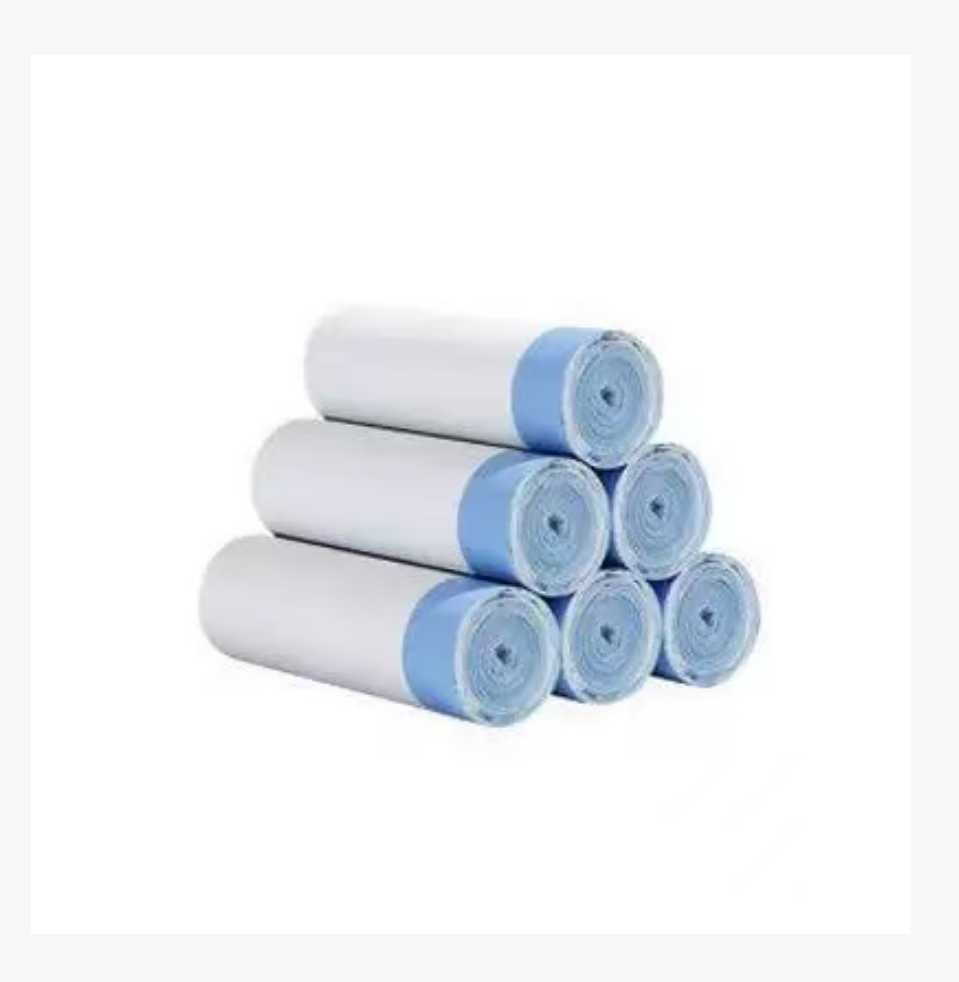
4. Why Are PCR Bags More Expensive Than Virgin Material Bags?
Many customers may think PCR is recycled material and thus cheaper than virgin material, but that's not the case. The cost of PCR lies not in the raw material itself but in the "transparency of the recycling chain."
-
Sorting & Cleaning Costs: Achieving clear-grade PCR requires extremely stringent manual or optical sorting.
-
Loss Compensation: Scrap rates for PCR bag production are typically 5-8% higher than for virgin material.
-
Compliance Premium: Maintaining certificates and applying for Transaction Certificates (TCs) each time costs both time and money.
5. Future Trend: Combination of Mono-material and Down-gauging Technology
In our vertical field, the most cutting-edge direction is "mono-material circularity." To facilitate recycling, future plastic bags will move away from composite structures like PE/PET. Our current R&D focus is on using multi-layer co-extrusion technology to enable 100% PE material packaging bags to achieve barrier properties and rigidity close to PET.
Simultaneously, "down-gauging" is a highly searched term. By incorporating specialized metallocene catalysts into PCR, we can reduce thickness by 20% while maintaining or even exceeding standard thickness tear strength.
Conclusion: Choose a Partner Who Can Navigate These Challenges with You
When searching for suppliers on an independent Google site, you're not just looking for a processing factory, but a technical partner who can help you deal with complex ESG audits and import regulations.
If you are planning next year's eco-friendly packaging upgrade or struggling with current PCR packaging quality instability, please contact us. We don't just provide a bag; we provide a complete compliance solution—from raw material traceability to physical performance test reports (TDS/COA).
Insider Secrets from a Veteran Plastic Bag Manufacturer: The Truth About Thickness Consistency
How to Optimize Your Brand’s Cost and Sustainability from the Production Source?
Related Article